

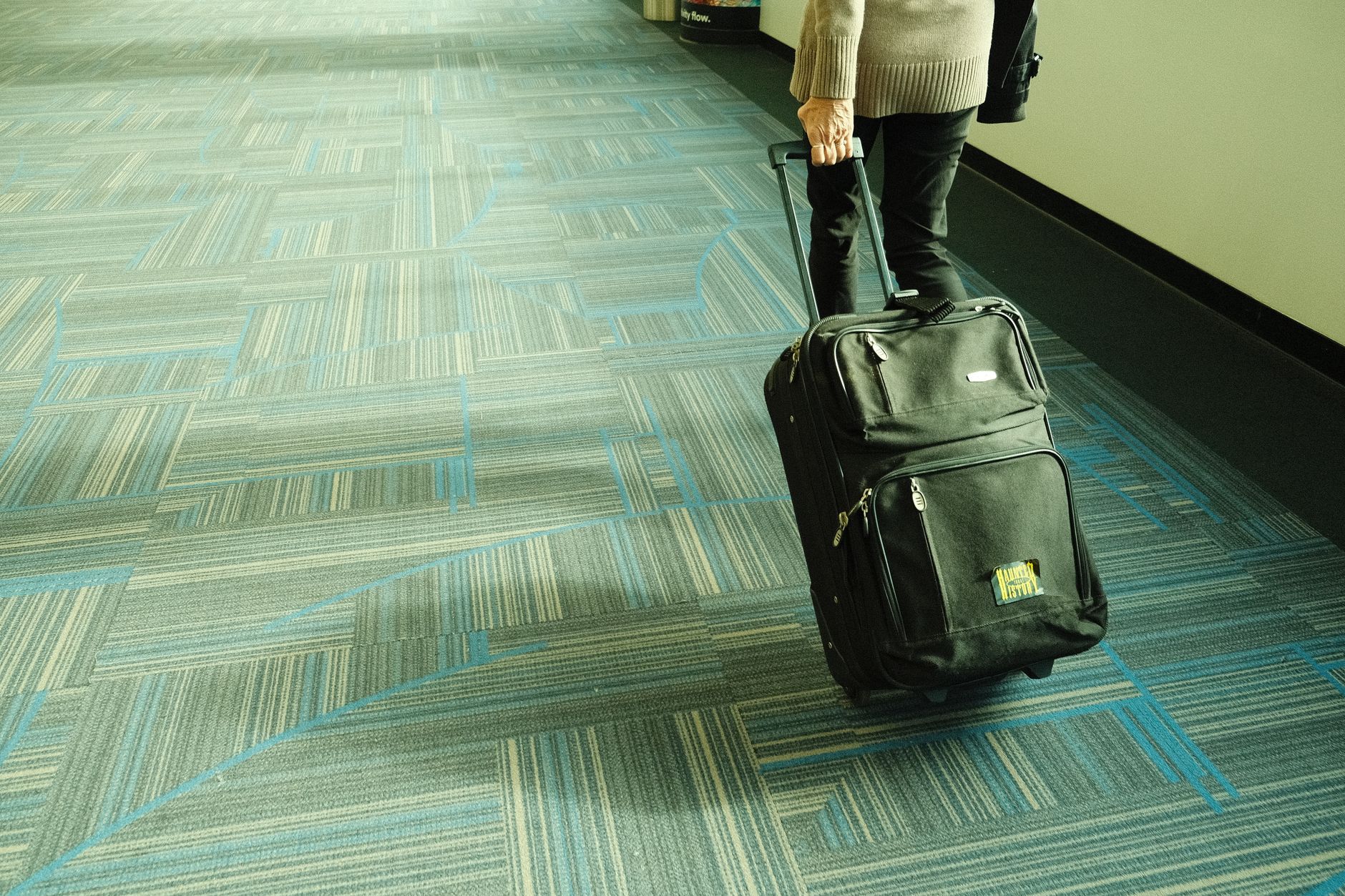
Anyone who has dragged two overpacked suitcases across a train platform knows the real cost of heavy luggage. It isn’t the airline fee. It’s the moment you arrive tired at a station like Roma Termini or Paris Gare du Nord, you’ve got a 23kg case and a 12kg carry-on, and you still have three connections and a flight of stairs between you and your hotel. The packing decisions you make at home and the way you handle the last leg of the trip decide whether that moment is annoying or genuinely miserable.
Here’s how to keep both halves under control.
pack so the weight works with you, not against you
Most luggage problems start before you leave the house. A few habits make a real difference once you’re on the move with the bags.
- Put the heaviest items (shoes, books, toiletry bags, chargers) at the bottom of the case near the wheels. A bag loaded this way stays upright and pulls straight instead of tipping over every time you stop.
- Choose one large hard-shell spinner over two medium soft bags if you can. Two free hands beats four wheels you have to wrangle in different directions, especially in a lift or a narrow hotel corridor.
- Weigh each bag at home with a cheap luggage scale. Knowing a case is 19kg rather than guessing means you avoid repacking on the airport floor, and you know exactly what you’ll be lifting later.
- Keep a soft, empty duffel folded inside your case. If you overbuy on the trip, you split the load across two bags instead of forcing one zip to its limit.
- Wrap anything fragile in clothing rather than carrying it separately. Fewer loose items means fewer things to drop while you’re juggling a suitcase and a phone showing your transfer details.
Label everything clearly, inside and out. If a bag goes missing on a connecting flight, a tag with your name and a contact number speeds up the recovery a lot.
the airport is the easy part. the bit after is where people struggle
Airlines handle your checked bags inside the terminal. The hard work begins the second you walk out of arrivals. At big hubs like London Heathrow, Madrid Barajas or Bangkok Suvarnabhumi, the walk from the baggage belt to the taxi rank or train can be long, and it often involves escalators that aren’t friendly to a loaded trolley.
Public transport is cheap, but it rarely takes your luggage seriously. Train luggage racks fill up fast. Metro turnstiles weren’t built for a 28-inch case. And if your final stop is a residential street with no lift, you finish the journey carrying everything by hand.
This is the gap a private door to door transfer closes. The driver meets you in the arrivals hall, takes the bags, and the suitcases go from the carousel to the boot to your front door without you lifting them more than once.
what a private transfer actually changes
When you book a GetPrivateRide transfer, you tell us the route and how many bags you have, and the price is fixed before you travel. No surge pricing because it’s raining, no meter ticking while you’re stuck in traffic on the way into the city.
A few details matter specifically when luggage is the issue:
- Tell us the number and size of bags at booking. Three large cases and a set of golf clubs need a bigger vehicle than two carry-ons, and getting that right means everything fits the first time.
- Our drivers track your flight. If you land late from a delayed connection at somewhere like Frankfurt, the driver is still there. You don’t lose a pre-paid ride because the plane sat on the tarmac.
- Drivers speak English, so explaining that you need the drop-off at the rear entrance with the ramp, not the main steps, is straightforward.
Door to door means the literal door. If you’re heading to a fourth-floor apartment in central Lisbon, you’ve still got the stairs, but you’ve skipped the bus, the cobbled walk from the stop, and the part where you balance a case on your knee at a ticket machine.
plan the last 200 metres before you book
The smartest thing you can do is think about the very end of the trip first. Is there a step at the entrance? A gate code? A street the car can’t enter? Sort that out in advance and put any notes in your booking so the driver knows where to stop.
Plans change too, and heavy travel days have a way of going sideways. On 99% of rides you can cancel online if something shifts, which takes the pressure off committing early. Book the route, give us the bag count, and let the driver handle the lifting while you handle the rest of the trip.